





Solar panels for caravan parks: when your busiest season is also your sunniest
Solar panels for caravan parks make unusually strong commercial sense, and the reason is the one thing owners worry about most: the seasonal trade. A park's demand is concentrated from April to October, and that is precisely when solar generates the most, so the alignment between peak occupancy and peak sunshine is the distinctive hook for this sector rather than a problem to work around. When a coastal park is running 80% occupancy in August, the showers, the pool plant, the bar refrigeration and the guest EV chargers are all working hardest in the middle of the day, exactly when the panels produce the most. In-season self-consumption is therefore naturally very high, and self-consumption is the single biggest driver of solar payback. Where a 24/7 factory has to export a chunk of its generation cheaply, a well-sized holiday park consumes most of what it makes during the season that matters.
Energy is now one of the largest controllable costs on a park after staffing, and on most sites the site-wide bill has roughly doubled since 2021. Pitch margins were already thin, and standing charges, frost protection and reception running costs do not stop in the off-season even when income falls close to zero. Solar fixes a large slice of that bill for two decades from a single investment, and it gives the park an auditable green story for guests at a time when Green Tourism awards increasingly influence bookings.
Why holiday and caravan parks suit solar
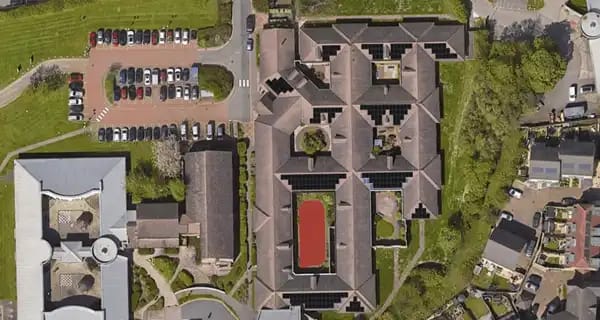
Three features set this sector apart. First, the seasonal load curve runs with the sun, not against it, so the panels are busiest when the park is busiest. Second, parks are rich in solar-friendly space: reception and shop buildings, amenity and shower blocks, swimming pool plant rooms, clubhouses and entertainment venues, plus ranks of static-caravan and lodge roofs and open land between pitches. Third, guest EV charging is fast becoming an expectation, and pairing chargepoints with on-site solar absorbs daytime generation at close to 100% self-consumption. Adding battery storage lets you charge cars from stored solar into the evening peak without overloading your DNO supply, which often defers or avoids an expensive grid upgrade. That last point matters on many parks because rural and coastal sites frequently sit on capacity-constrained networks, where a weak grid connection makes generating your own power on site even more valuable.
How we size systems
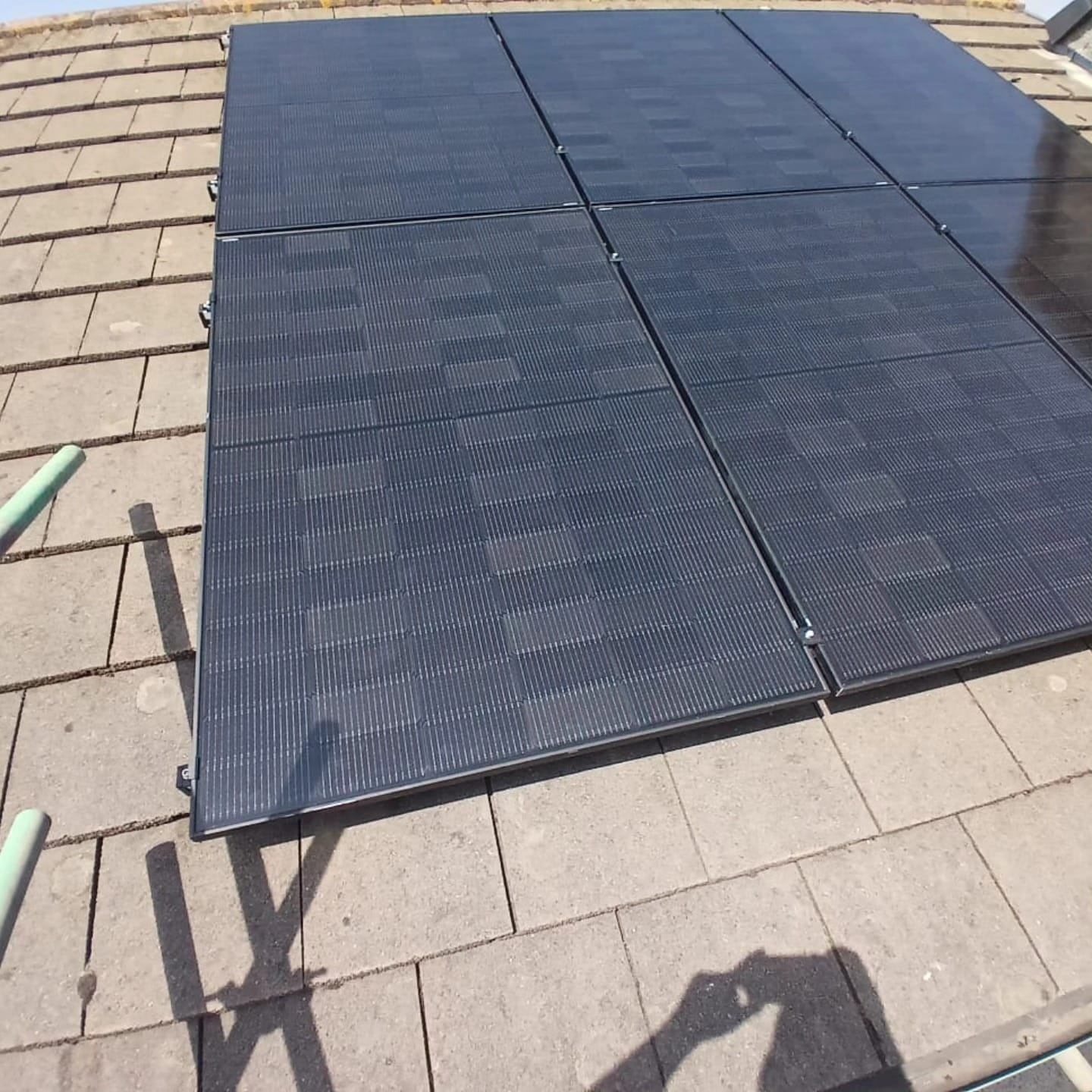
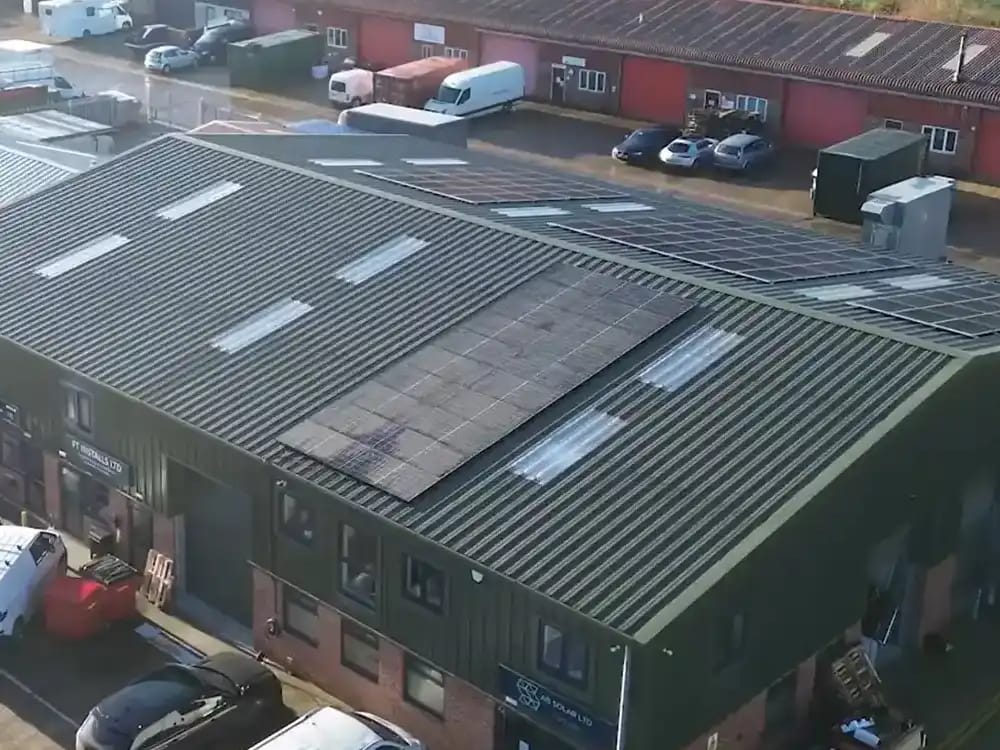
For a static caravan park we usually design a system in the 50 to 500 kW range, which is roughly 90 to 920 panels spread across about 300 to 3,000 square metres of roof, typically the amenity blocks, reception, shop and any leisure building, with static-caravan roofs hosting micro-arrays where ground or roof space is tight. A system that size generates in the region of 45,000 to 460,000 kWh a year and saves somewhere between 10 and 106 tonnes of CO2 annually. We never simply fill the roof. Sizing starts from at least twelve months of half-hourly site meter data overlaid on your occupancy calendar, because a park running 80% occupancy in August and 5% in January has a load curve nothing like a year-round business. We size to the peak-season daytime baseload of the highest-value loads first (swimming pool plant, shower-block hot water, kitchen and bar refrigeration, and increasingly guest EV charging), so the array is consumed on site when the park is full, and the off-season surplus exports under the Smart Export Guarantee.
A question almost every owner asks is whether to put panels on each caravan or on the park as a whole. The answer is almost always site-wide rather than per-van. We feed the array into the park's private distribution network so it offsets everything you pay for as the operator (pitch pillars, reception, shop, laundry, amenity blocks, pool and lighting), and you keep the saving or recover it through your pitch electricity charges. Per-unit micro-arrays only make sense for genuinely off-grid pods or where there is no shared roof or ground space at all.
Costs, payback and tax relief
A single static caravan park project typically lands between £45,000 and £450,000 fully installed depending on size and roof area, with a simple payback near 6 years and the electricity effectively free for the years after that. By far the biggest lever in the numbers is the tax relief. The panels, inverters, mounting and battery storage all count as plant and machinery, so up to the £1m annual cap the 100% Annual Investment Allowance lets most park businesses set the cost against year-one profit, returning as much as a quarter of the project value in tax to a limited company. Here is the point owners often miss: as a special-rate asset solar is excluded from full expensing, yet the 100% AIA still relieves it in full, and a single-park install almost always lands inside the cap. Above the cap, the 50% First Year Allowance applies to the balance, which is mainly relevant to larger multi-park roll-outs. These figures are illustrative and depend on your park, load profile and tariff. Our cost guide sets out worked numbers for different park sizes.
Funding routes
Few parks fund a solar install from cash, and they do not need to. The 100% AIA is the foundation. Beyond that, the Smart Export Guarantee matters more here than in a 24/7 business because parks export significantly through the quiet October to March months, earning income on power you would not otherwise have used; SEG tariffs are typically in the region of 4 to 15p per kWh fixed in 2026, and because each supplier sets its own it is worth shopping around. If you want to offer guest or staff EV charging, the Workplace Charging Scheme from OZEV funds up to 75% of chargepoint cost, capped at £500 per socket from April 2026, up to 40 sockets and a maximum of £20,000 per applicant. And while it is not a grant, Green Tourism accreditation turns your on-site solar into auditable evidence behind a Gold award, a measurable booking and pricing advantage. The funding page covers export tariffs and the EV charging scheme in detail.
Compliance and sector considerations
The defining compliance point for a caravan park is the site distribution itself. It must comply with BS 7671 Section 708, the standard for electrical installations in caravan and camping parks, with pitch socket-outlets to BS EN 60309-2, IP44 rated, at least 16A and with RCD protection. Solar feeds into the park's private distribution network, not into individual vans, which is exactly why the site-wide metering model works. There is a clear split between amenity buildings and pitches: rooftop PV on commercial park buildings (reception, amenity blocks, leisure complexes) generally falls under permitted development within size limits, whereas the pitch supply is governed by Section 708 and periodic inspection is recommended at intervals not exceeding three years under IET Guidance Note 3. Planning needs more care in rural and protected settings: AONBs, National Parks, conservation areas and coastal sites attract greater scrutiny, so we favour roof-mount and discreet, screened ground-mount, and provide the visual-impact and landscape assessment the authority expects. A G99 grid application is required for connections above 17 kW per phase, and on capacity-constrained rural and coastal networks a connection study is essential before final sizing.
How we approach the project
We start with at least twelve months of half-hourly site meter data and overlay your occupancy calendar, then size for peak-season self-consumption rather than a generic commercial profile. A full BS 7671 Section 708 condition survey of the site distribution is standard, so where pitch pillars, the amenity-block board or the incoming supply need bringing up to current standard, that work can usually be funded inside the same capital envelope as the PV, giving you one coordinated plan rather than two separate jobs. We submit the G99 grid application immediately after the survey to start the clock, because that is the longest lead item, and where export capacity is tight we can design for self-consumption only or add battery storage. Every proposal is fixed-price, every install carries a 10-year insurance-backed workmanship warranty, and coastal parks get a salt-resistant specification as standard. We also schedule the disruptive work for your closed or quiet season so peak-season trading is untouched, and our certifications (MCS, NICEIC or NAPIT, RECC, TrustMark and OZEV where charging is added) bring solar, site electrics and charging under one accountable contract.
An illustrative example
As an illustrative composite based on typical UK caravan park projects, and not a real named client: a family-owned 320-pitch coastal park running an indoor heated pool, two amenity blocks, a clubhouse and a shop saw its site-wide electricity bill rise from around £62,000 to £121,000 in three years, with occupancy above 85% from April to October and near-empty in winter. A roughly 182 kW system of about 336 panels was modelled across the pool building, clubhouse and amenity-block roofs, generating in the region of 165,000 kWh a year for an annual saving near £41,000 and a payback close to 5.6 years. In-season self-consumption sat around 84% on the pool plant and shower-block hot water, off-season surplus earned SEG income, the full cost was relieved in year one under the Annual Investment Allowance, and a salt-resistant coastal specification was used. The figures are illustrative and depend entirely on your park, load profile and tariff.
If your park also runs static caravans, lodges or a touring field, our pages on solar for caravan parks and solar for lodge and glamping parks go deeper on each. When you are ready, read the cost guide and funding routes, then request a free feasibility from your meter data, or read the holiday park solar FAQs first.